Can Muslim students find halal food and prayer facilities in China?
Usually yes, and the practical question is not whether halal food exists in China but whether it exists on your campus. Many universities — especially larger ones and those with many students from Muslim-majority countries — run a separate halal canteen (清真食堂) or at least a halal window, and most cities with a Muslim community have halal restaurants and shops. Prayer rooms exist on many campuses, but not on all. Confirm the two things you actually need — a halal kitchen and a place to pray — before you accept an offer.
On campus: halal canteens and prayer rooms
- A separate halal canteen (清真食堂) is common at larger universities and at those that host students from Muslim-majority countries; it has its own kitchen and staff.
- Smaller campuses may have only a halal window inside the main canteen, or a dedicated counter during certain hours. That is a real difference in daily life.
- Prayer rooms (礼拜室) exist on many but not all campuses, often near the halal canteen, the sports complex or the international student building.
- The international students office can tell you exactly what your campus has. Ask by email so you have it in writing.
Halal food in the city
- Lanzhou beef noodle restaurants are everywhere in China and are halal; they are the reliable everyday option in almost any city.
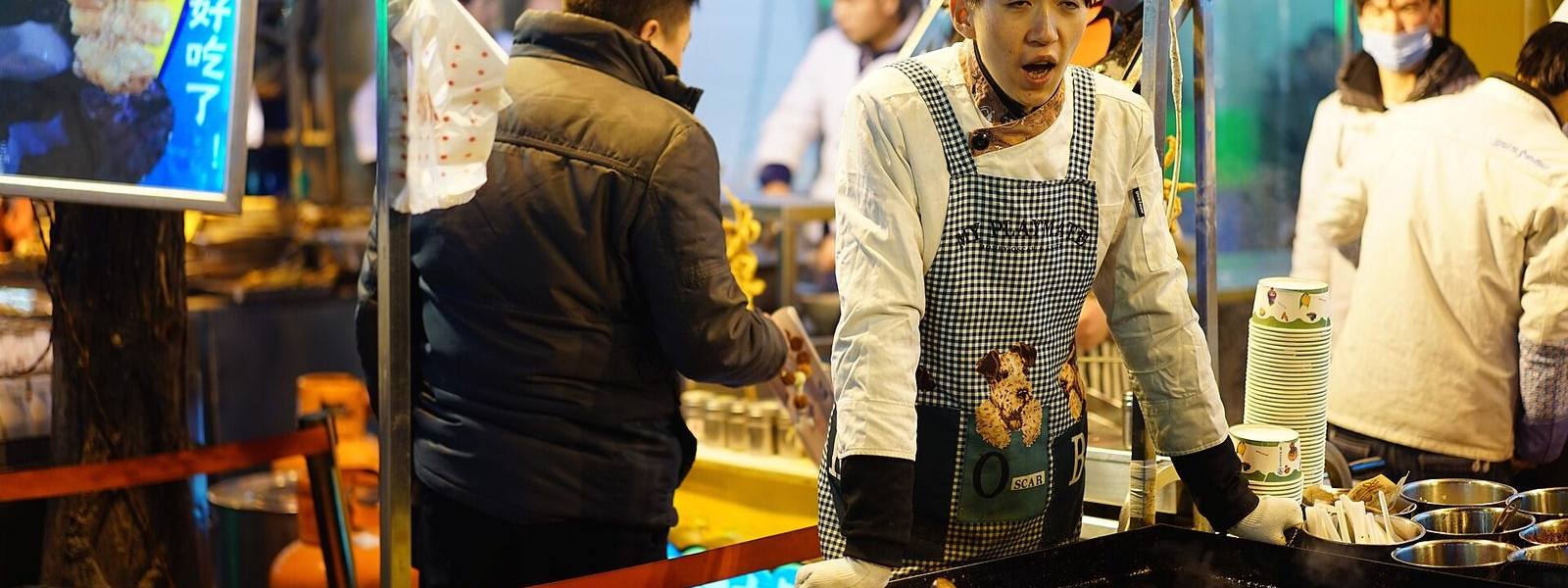
- Hui and Xinjiang restaurants, and food streets in cities with Muslim communities, offer a much wider choice of halal dishes.
- Cities such as Xi'an, Urumqi, Lanzhou, Yinchuan, Linxia, Beijing (Niujie), Guangzhou and Yiwu have long-established Muslim communities and an obvious halal food scene.
- For cooking at home, halal butchers and imported-food shops exist in cities with Muslim communities; ask local students where they shop.
Prayer, Friday prayer and Ramadan
- Most cities of any size have at least one mosque, and Friday prayer is widely attended; distance from campus is the thing to check.
- Religious practice is personal in Chinese universities: there is no requirement to declare your religion, and no campus requires you to change how you practise.
- During Ramadan, tell your programme or dormitory if you need meals outside normal canteen hours, or if you need to adjust a laboratory or training schedule.
- If your campus has no prayer room, students usually arrange a quiet shared space with the international office, or pray at a nearby mosque.
Three questions to ask before you accept an offer
- Is there a halal canteen (清真食堂) on the campus where my programme is taught, or only a halal window?
- Is there a prayer room on campus, and is it open to students?
- How far is the nearest mosque and the nearest halal grocery from the campus?
Why the city matters as much as the university
- A campus without a halal canteen is workable in a city with a Muslim community, and much harder in a city without one.
- Universities with large numbers of international students from Muslim-majority countries tend to have both a halal kitchen and prayer space, because they have organised for it over years.
- If you are choosing between two similar programmes, food and prayer facilities are a legitimate reason to pick one city over another.
Common questions
Do all Chinese universities have halal food?
No. Larger universities and those with many students from Muslim-majority countries usually have a separate halal canteen; smaller campuses may only have a halal window. Confirm with the international students office before you accept an offer.
Can I pray on campus?
Many campuses have a prayer room, but not all. Where there is none, students usually agree on a quiet room with the international office, or pray at a nearby mosque. Friday prayer is normally at a city mosque.
Is it acceptable to fast during Ramadan?
Yes — religious practice is personal and universities do not interfere with it. Tell your programme or dormitory if you need meals outside canteen hours or adjustments to laboratory or training schedules.
Will I find halal food outside campus?
In most cities yes: Lanzhou beef noodle restaurants are halal and widely available, and Hui or Xinjiang restaurants are common. Cities with established Muslim communities also have halal butchers and grocery shops.
Do I have to declare my religion to the university?
No. The practical reason to mention it is to ask about food and prayer facilities on your campus, which is a normal question for the international students office.
Research first, then verify at the source
VisChat is an independent information and data site. Compare programmes here, then use current university and government pages to confirm the details that apply to you.